Massage for Plantar Fasciitis: What Helps and What to Try
Can massage help plantar fasciitis? What studies show about calf and arch massage, self-massage you can do at home, and when heel pain needs a doctor.
For some people, massage can ease plantar fasciitis pain, especially when the work addresses the calf muscles as well as the arch, and pairs with daily stretching. The research is small but encouraging. Massage does not replace a medical diagnosis, and heel pain that lasts more than a week, follows an injury, or comes with numbness should be checked by a healthcare provider.
What plantar fasciitis is
The plantar fascia is a thick band of tissue that runs from your heel to the ball of your foot and helps form the arch. Cleveland Clinic describes plantar fasciitis as the most common cause of heel pain. More than 2 million people in the U.S. receive care for it each year, and around 1 in 10 people develop it at some point.
The classic sign is pain in the heel or arch during your first steps in the morning, or when you stand up after sitting. The ache often settles after a few minutes of walking, then returns after long periods on your feet. Common triggers include standing all day for work, running or training on hard surfaces, and wearing unsupportive footwear. Flat feet or high arches can also matter, as can carrying extra weight.
Researchers now often describe the condition as degenerative rather than purely inflammatory, as a 2021 massage therapy case report notes. That shifts the focus of care to loading, stretching and tissue flexibility rather than rest alone.
Does massage help plantar fasciitis?
The best evidence points to massage as a useful addition to stretching, not a cure on its own.
- Deep calf massage. In a randomized trial published in Manual Therapy in 2014, 69 people with plantar heel pain had eight treatments over four to six weeks. One group received deep massage to the calf muscles plus nerve mobilization and self-stretching. The other received ultrasound therapy to the heel with the same stretches. Both improved, but the massage group improved more: 15 points on a foot function scale, compared with 6.
- Myofascial release. A 2016 systematic review in Manual Therapy found that myofascial release to the calf muscles (gastrocnemius and soleus) and the plantar fascia was effective for plantar fasciitis. The same review found that trigger point therapy may add little or nothing when someone is already doing self-stretching.
- Thai massage. A 2025 randomized trial of 60 people with heel pain found that a single 40-minute traditional Thai massage reduced pain immediately and 24 hours later. Ultrasound therapy with stretching did better on pain and ankle movement, so the authors saw Thai massage as a complement to physical therapy.
These trials remain small, and most evaluated several sessions alongside stretching. But the pattern is consistent. Soft-tissue work on the calf and the fascia, paired with a stretching routine, tends to help more than treating the heel alone.
Why the calf matters
Tight calf muscles and a stiff Achilles tendon pull on the heel bone, increasing tension through the plantar fascia. The 2021 case report lists limited ankle flexibility, tight calf muscles and tight hamstring muscles among the common findings in plantar fasciitis. So an effective session for heel pain usually gives as much time to the lower leg as to the foot.
What a massage therapist may do
A licensed massage therapist cannot diagnose plantar fasciitis, but once a provider has, a session might include:
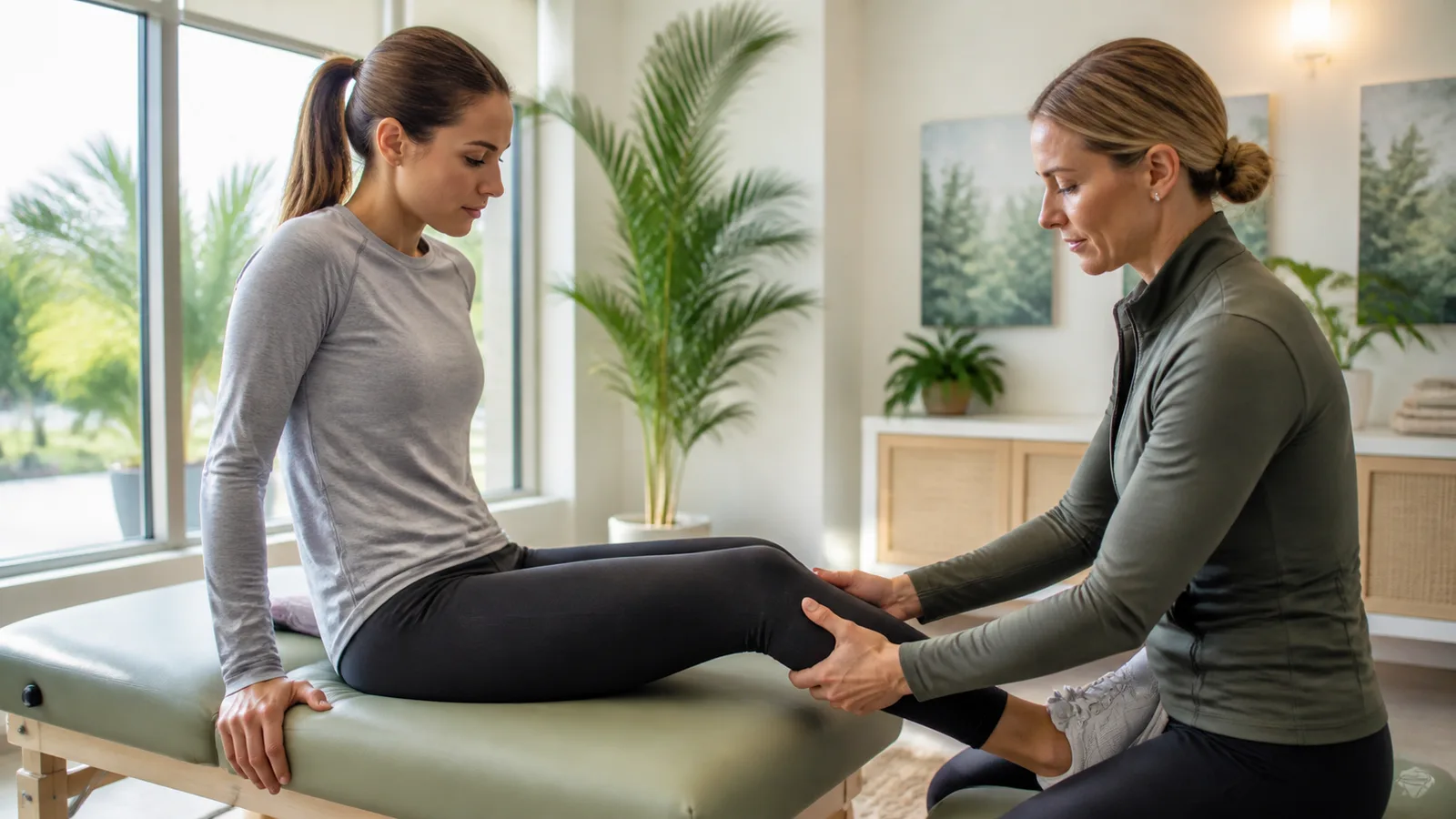
- Calf work. Slow, deep pressure through the gastrocnemius and soleus to reduce tension pulling on the heel. Our guide to deep tissue and Swedish massage explains how pressure levels differ.
- Myofascial release. Sustained, gentle stretching pressure on the fascia of the calf and the sole of the foot. Our myofascial release page explains the technique.
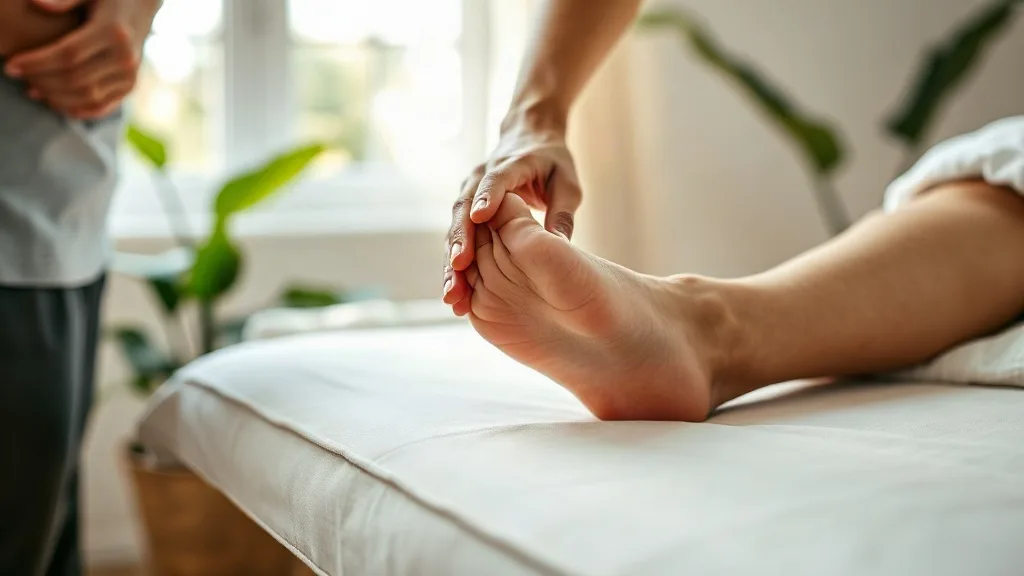
- Arch and heel work. Careful thumb pressure and stroking along the plantar fascia, kept within a level you can tolerate.
- Trigger point therapy. Focused pressure on tender spots in the calf, explained in our trigger point massage guide. The 2016 review suggests this may add little on top of stretching, so it works best as one part of a session.
- Stretching and movement. Assisted stretches for the calf and ankle, plus advice on stretches to continue at home.
If you run or train regularly, a sports massage therapist can arrange sessions around your training plan.
Tell your therapist where the foot hurts, what aggravates it, and whether you have diabetes, poor circulation or reduced feeling in your feet. Those conditions dictate how much pressure is safe.
Self-massage you can do at home
Between sessions, simple self-care helps keep the tissue moving:
- Frozen water bottle roll. Roll your arch slowly over a frozen water bottle. Mayo Clinic suggests applying ice to the heel for 15 minutes, three or four times a day, and lists rolling a frozen bottle as an ice massage option. Keep a thin cloth between ice and skin.
- Ball under the arch. Roll a tennis ball or massage ball under your foot while seated, using moderate pressure.
- Calf self-massage. Use your hands, a foam roller or a massage stick on your calf muscles.
- Stretch your calf, Achilles and arch. Mayo Clinic lists simple stretches for the arches, calves and Achilles tendon among its self-care steps.
Stop any technique that causes sharp pain, and do not press hard over an area that is swollen, bruised or numb.
Other treatments that work alongside massage
According to Mayo Clinic, most people with plantar fasciitis recover within a few months using simple care. These include:
- Icing, stretching and avoiding the activities that cause pain
- Over-the-counter pain relievers such as ibuprofen or naproxen
- Physical therapy for stretching and lower-leg strengthening
- Night splints that hold the foot in a stretched position
- Arch supports or orthotics, and supportive shoes instead of flat shoes or bare feet
If symptoms do not improve after several months, a doctor may consider steroid or platelet-rich plasma injections. Shock wave therapy may also be considered, or, rarely, surgery.
When to see a doctor instead
Cleveland Clinic advises seeing a healthcare provider for heel or foot pain that lasts more than a week. Get checked before booking a massage if:
- The pain started after a fall, jump or other injury
- You cannot put weight on your foot, or there is significant swelling or bruising
- You have numbness, tingling or burning in the foot
- You have diabetes or a condition that reduces feeling in your feet
- The pain keeps getting worse despite rest and stretching
Most people do not need imaging, though Mayo Clinic notes that an X-ray or MRI may be used to rule out other problems such as a stress fracture.
Finding a massage therapist for heel pain in Florida
Look for a licensed massage therapist who provides deep tissue, myofascial release or sports massage, and ask whether they regularly work with plantar fasciitis. You can browse licensed massage therapists across Florida and contact them directly to ask about their experience before you book.
Frequently asked questions
How often should I get a massage for plantar fasciitis?
The 2014 trial used eight sessions over four to six weeks, roughly one or two a week, alongside daily stretching. Your therapist and healthcare provider can help tailor a schedule that fits your symptoms.
Should massage for plantar fasciitis hurt?
You may feel firm pressure and some tenderness, but bodywork should not cause sharp or worsening pain. Tell your therapist straight away if it does.
Is it better to massage the foot or the calf?
Both. The studies with the best results worked on the calf muscles as well as the fascia under the foot.
Can massage make plantar fasciitis worse?
Heavy pressure on an irritated heel can increase soreness. Start gently. Let your therapist know if pain builds during or after a session.
Sources
- Cleveland Clinic: Plantar Fasciitis
- Mayo Clinic: Plantar fasciitis, diagnosis and treatment (August 2026)
- Saban et al., Manual Therapy (2014): Deep massage to posterior calf muscles for heel pain
- Piper et al., Manual Therapy (2016): Soft-tissue therapy for upper and lower extremity disorders
- Somphai et al. (2025): Traditional Thai massage vs ultrasound for plantar heel pain
- Juchli (2021): Massage including proximal trigger point release for plantar fasciitis, a case report
Encuentre terapeutas con licencia cerca de usted
Explore terapeutas verificados en 19 ciudades de Florida. Contacto directo, sin tarifas de reserva.