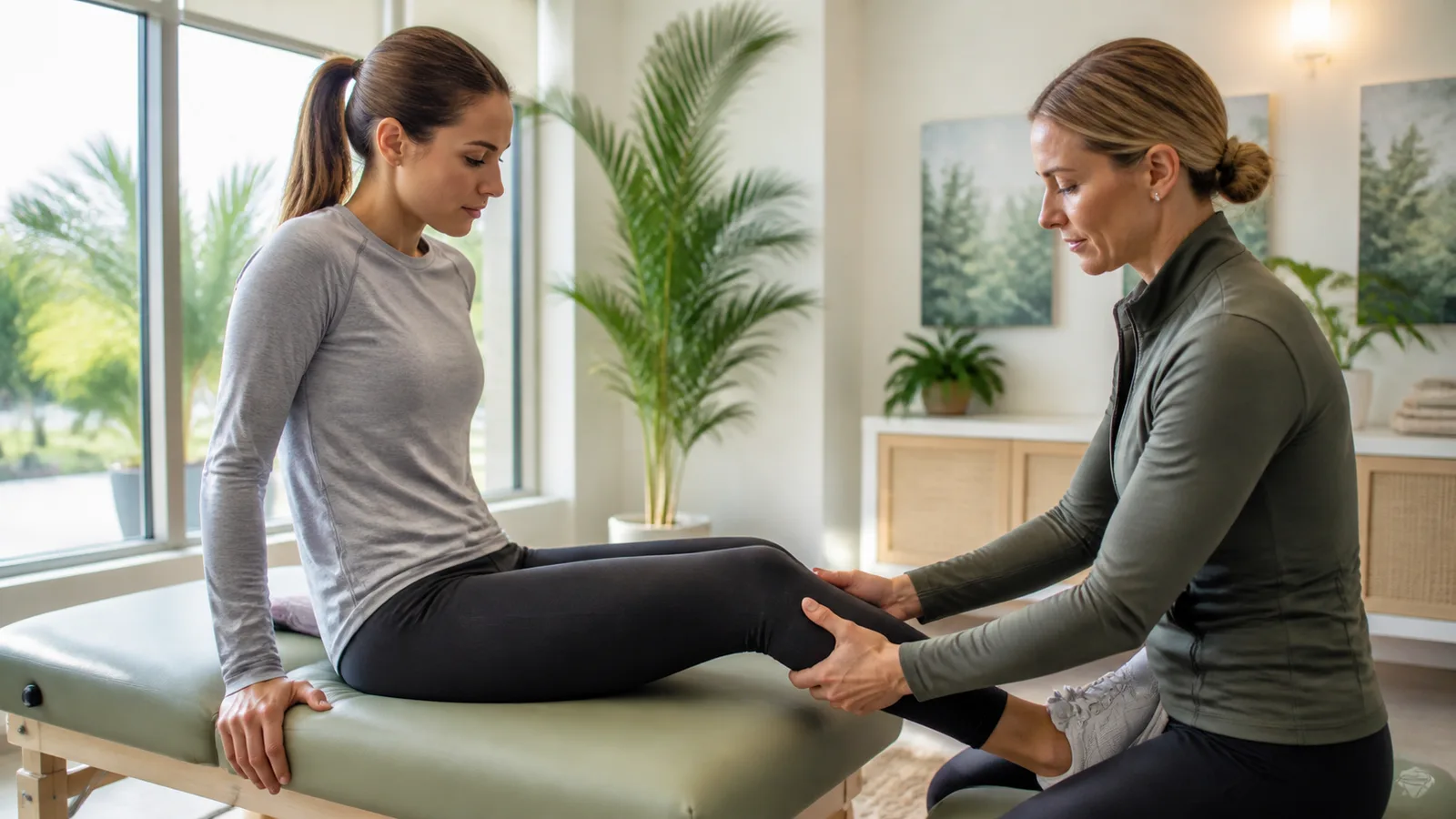
Can Massage Help Sciatica? Best Techniques, Limits, and When to See a Doctor
Can massage help sciatica? Learn which techniques may ease muscle tension, what massage cannot treat, red flags, and how to find a Florida LMT.
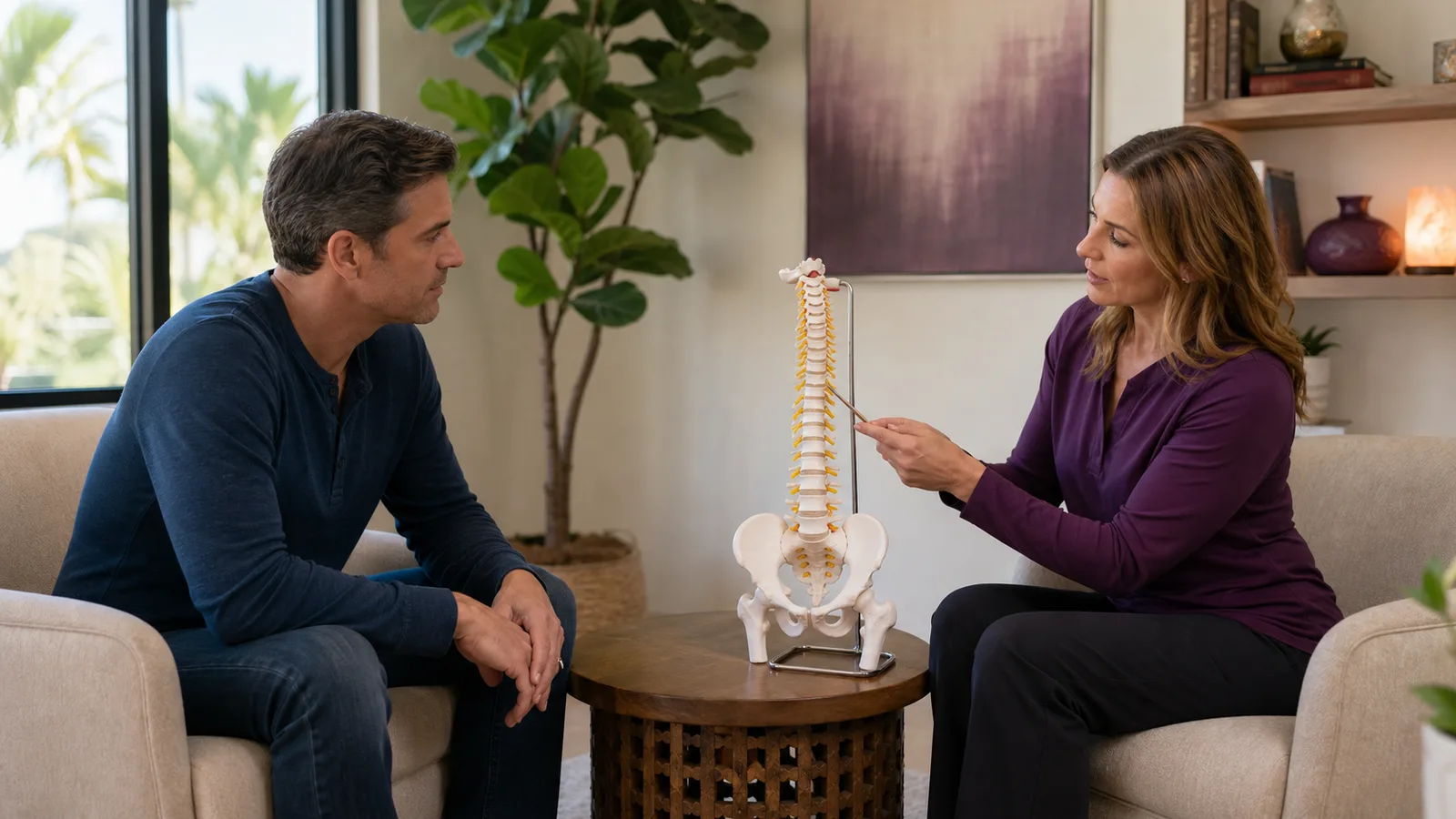
Massage may help some people with sciatica feel less guarded and move more comfortably by easing tension in the lower back, hips, and gluteal muscles. It cannot remove a herniated disc, bone spur, or other source of nerve compression. New weakness, saddle numbness, or bladder or bowel changes need urgent medical care, not a massage appointment.
What sciatica actually means
Sciatica is a pattern of nerve-related symptoms, not a diagnosis by itself. It commonly involves pain that starts in the lower back or buttock and travels down one leg. Tingling, numbness, burning, or weakness can occur as well.
Cleveland Clinic's sciatica guide distinguishes true sciatica, where the sciatic nerve or its roots are irritated or compressed, from sciatica-like conditions caused by nearby structures. A herniated disc, spinal narrowing, bone changes, or injury can affect the nerve. Tight or overloaded muscles around the hip may also create symptoms that feel similar.
That distinction matters because massage works on soft tissue. It may calm muscular tension surrounding an irritated area, but a massage therapist cannot diagnose the cause of radiating leg pain or physically reposition a spinal disc.
If you have only local lower-back aching without pain, numbness, or tingling traveling into the leg, our guide to massage for lower-back pain may be the more useful starting point.
Is massage good for sciatica?
It can be a reasonable comfort measure when a healthcare professional has ruled out urgent causes and movement or muscle guarding makes symptoms worse. People sometimes report short-term relief when careful work reduces tension in the gluteal muscles, hip rotators, hamstrings, or lower back.
The evidence should be described honestly. The National Center for Complementary and Integrative Health says research on massage for low-back pain shows, at most, short-term benefits and low-certainty evidence. That body of research is not the same as proof that massage treats lumbar nerve compression. A 2025 network meta-analysis of nonsurgical treatments for chronic sciatica also concluded that confidence in the available evidence is very low.
Massage is therefore best considered supportive care. A good goal is less surrounding tension, easier rest, or improved tolerance for clinician-approved movement. A claim that massage will cure sciatica or permanently release the sciatic nerve is not supported.
When massage may help — and when it probably will not
Massage may be worth discussing with your clinician when:
- A clinician has evaluated persistent or recurrent radiating pain
- Symptoms are stable rather than rapidly worsening
- Tight gluteal or hip muscles accompany the nerve symptoms
- You can lie or sit comfortably enough for treatment
- Your care plan already includes appropriate movement, physical therapy, or medical follow-up
Massage is less likely to address the main problem when:
- Symptoms come from a herniated disc, spinal stenosis, fracture, tumor, infection, or another structural cause
- Numbness or weakness is increasing
- Pressure over the hip or lower back makes symptoms travel farther down the leg
- You are relying on massage instead of obtaining a diagnosis
A useful session should never become a test of how much pain you can tolerate. Nerve symptoms that spread farther down the leg, become sharper, or create new numbness are reasons to stop and reassess.
Which massage techniques are commonly considered?
There is no single “sciatica massage.” The right approach depends on what has been medically evaluated, where you feel symptoms, and how sensitive the area is that day.
Gentle Swedish massage
Broad, light-to-moderate strokes may help someone relax without aggressively loading an irritable area. This can be a sensible first session when pain has caused widespread guarding or poor sleep. Relaxation is a valid outcome even when the source of sciatica remains unchanged.
Myofascial release
Myofascial release uses slow, sustained contact rather than rapid or forceful pressure. An LMT may work around the low back, outer hip, and gluteal tissues while monitoring whether symptoms stay local or travel down the leg.
Trigger point therapy
Trigger point therapy targets small, sensitive areas in muscle that can refer discomfort elsewhere. It may be considered when the gluteal muscles or deep hip rotators reproduce a familiar muscular ache. It should not be presented as releasing a compressed spinal nerve.
If you are comparing terminology before booking, read what trigger point massage is and how it differs from deep tissue.
Neuromuscular therapy
Neuromuscular therapy is focused work organized around patterns of muscular tension and movement. The label does not mean the therapist is treating the nervous system as a physician or physical therapist would. Ask what training the LMT has and what the session will actually involve.
Deep tissue massage
Deep tissue massage can be useful for chronic muscular tension, but “deeper” is not automatically better for radiating pain. Forceful pressure near an already sensitive area can flare symptoms. A skilled therapist will adjust depth, avoid direct pressure that reproduces nerve pain, and stop if symptoms worsen.
Where does a therapist massage for sciatica?
Treatment is usually broader than pressing one spot. Depending on your evaluation and tolerance, an LMT may address:
- Muscles alongside the lumbar spine, without pressing directly on the vertebrae
- Gluteus maximus and gluteus medius
- Deep hip rotators around the back of the hip
- Hamstrings and calf muscles that have become guarded
- The opposite hip or trunk when compensation has changed your movement
Directly digging into the most painful point is not a reliable strategy. A therapist should use your feedback, work gradually, and avoid trying to “chase” electrical, burning, or shooting sensations down the leg.
What to expect at the first session
Tell the therapist when the symptoms began, where they travel, what positions help, and whether a clinician has given you a diagnosis. Disclose recent injuries, surgery, pregnancy, blood thinners, osteoporosis, loss of sensation, and any implanted medical device.
The therapist should ask about pressure and positioning before starting. Side-lying with pillows between the knees may be more comfortable than lying face down. The affected leg can be supported so the hip and low back are not held at an irritating angle.
During the session, describe changes precisely. “That feels tender in the muscle” is different from “that sends tingling into my foot.” The second response is a signal to stop or change technique.
Afterward, judge the session by function, not soreness. Easier walking, less guarding, or better sleep are more useful markers than feeling bruised. If symptoms spread farther down the leg or weakness increases, contact a healthcare professional.
How often should you book?
There is no evidence-based massage schedule that fits every case of sciatica. Start with one conservative session. If it provides a clear, short-term benefit without a flare, you and the therapist can decide whether another session fits your broader care plan.
Weekly massage may be reasonable for a short period when it supports mobility or comfort, but indefinite frequent visits should not replace reassessment. If several sessions make no measurable difference, change the plan rather than simply increasing pressure or frequency.
Red flags: skip massage and seek medical care
The Mayo Clinic advises immediate medical care for sudden leg numbness or weakness, symptoms after a violent injury, or trouble controlling the bladder or bowels. The NHS sciatica guidance also identifies severe or worsening symptoms in both legs and numbness around the genitals or anus as emergency warning signs.
Do not book massage first if you have:
- New difficulty starting urination or controlling the bladder or bowels
- Numbness around the groin, genitals, anus, or inner thighs
- Severe or worsening weakness or numbness, especially in both legs
- Pain after a fall, collision, or other major trauma
- Fever, unexplained weight loss, a cancer history, or signs of infection with new back and leg pain
- A swollen, red, hot, or unusually tender leg
For severe or rapidly changing symptoms, use emergency care. For persistent pain without emergency signs, contact a physician, physical therapist, or other qualified clinician for evaluation.
How to choose a Florida massage therapist
Look for an active Florida massage therapist license and experience working conservatively with clients who have been medically evaluated for radiating pain. Our Florida license verification guide explains how to confirm a therapist's status with the Department of Health.
Before booking, ask:
- Have you worked with clients who have stable sciatica symptoms?
- How do you adjust pressure when nerve symptoms are present?
- Will you use side-lying or supported positioning if face-down is uncomfortable?
- What would make you stop the session and refer me back to a clinician?
Clear limits are a positive sign. Browse licensed massage therapists across Florida and contact a suitable practitioner directly about your needs.
Frequently asked questions
Can massage get rid of sciatica permanently?
No. Massage may reduce surrounding muscle tension or provide short-term comfort, but it cannot guarantee permanent relief or remove structural nerve compression. The underlying cause needs an appropriate clinical evaluation.
Can massage make sciatica worse?
Yes. Excessive pressure, uncomfortable positioning, or work that reproduces shooting pain can cause a flare. Stop if symptoms spread farther down the leg, numbness increases, or new weakness appears.
Should a therapist massage directly over the sciatic nerve?
The goal is not to press on a nerve. Massage therapists work with surrounding soft tissue and should avoid forceful pressure that causes burning, electrical, shooting, or radiating symptoms.
Is deep tissue or Swedish massage better for sciatica?
Neither is universally better. Gentle Swedish work may suit a sensitive first session. Focused deep-tissue techniques may help muscular tension when tolerated, but aggressive depth is not appropriate simply because symptoms are severe.
Is piriformis syndrome the same as sciatica?
No. Both can produce buttock and leg symptoms, but they do not necessarily have the same cause. A clinician can help distinguish lumbar nerve-root irritation from hip-related or other sciatica-like conditions.
Can I get a massage during an acute flare?
Ask a healthcare professional first when symptoms are new, severe, or unexplained. If massage is approved, begin gently and use a position that does not increase radiating symptoms.
What should I tell the therapist before the session?
Share your diagnosis, symptom path, numbness or weakness, medications, surgeries, injuries, and the positions that improve or aggravate the pain. Mention every change during the session rather than trying to tolerate it silently.
Sources
More like this — every week
Florida-specific massage tips, therapist recommendations, and self-care guides.
Find Licensed Massage Therapists Near You
Browse verified therapists across 20 Florida cities. Contact directly, no booking fees.